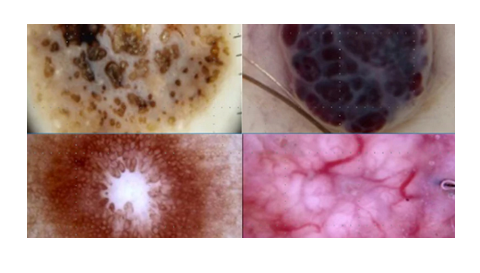
The Non-Melanocytic Lesions Part 1 course provides a comprehensive approach to understanding and diagnosing non-melanocytic skin lesions. This single-unit course focuses on key diagnostic methods, dermoscopic patterns, and histopathological features to ensure accurate identification and management.
This unit introduces participants to the wide spectrum of non-melanocytic lesions, emphasising diagnostic precision and practical applications. Key topics include:
- Introduction to Non-Melanocytic Lesions
- Overview of benign and malignant non-melanocytic lesions, including keratinocytic, vascular, fibrous, and sebaceous lesions.
- The importance of pattern recognition in dermatological diagnosis.
- Dermoscopic Patterns and Diagnostic Tools
- Use of diagnostic algorithms, including "Chaos and Clues" for pigmented lesions and "Prediction without Pigment" for non-pigmented lesions.
- Recognising dermoscopic features such as clods, lines, and structureless patterns.
- Differentiating between benign lesions like seborrhoeic keratosis and malignant lesions like squamous cell carcinoma.
- Histological Correlations
- Understanding the histological architecture of common lesions, including seborrhoeic keratosis, solar lentigo, and dermatofibroma.
- Identifying features such as basal pigmentation, keratinocyte hyperplasia, and collagen changes in the dermis.
- Case-Based Learning
- Interactive case studies showcasing real-world examples of non-melanocytic lesions.
- Strategies for integrating dermoscopy and histopathology in clinical practice.
By completing this course, participants will enhance their ability to diagnose and manage non-melanocytic lesions effectively, reducing unnecessary excisions and ensuring timely identification of malignant conditions. This program is ideal for clinicians seeking to expand their dermatological expertise.
Learning Outcomes
- Apply clinical and dermatoscopic information in evidence-based decision making with respect to skin lesions
- Define and use key terminology for dermatoscopy
- Apply decision algorithms in the diagnosis of both pigmented and non-pigmented skin lesions
- Define and use terminology used in dermatopathology
- Distinguish the histological features of common and less common benign and malignant non-melanocytic skin lesions.
Details
Cost: Please refer to Healthcert's website
Suitable for: All degree qualified medical practitioners
Study mode: 100% online
Disclaimer: Please note, once you click 'Register now' you will be leaving the AMA’s CPD Home website and entering a third-party education provider’s website. If you choose to register for this learning, you will need to provide some of your personal information directly to the third-party education provider. If you have any queries about how third-party education providers use, disclose or store your personal information you should consult their privacy policy.
Upon completion, your CPD activity record may take up to 4 weeks to be reflected on your CPD Home Dashboard.