Please wait...

Learn

Finding accredited CPD

Foundations of hair & scalp - anatomy & function 2

Description

Foundations of Hair & Scalp: Anatomy & Function 2 expands on the biological principles introduced in the first course by examining the structure of the hair shaft, the diversity of human hair types, the mechanisms that determine hair colour, and the unique anatomy of the scalp. Understanding these topics is essential for recognising hair and scalp disorders, advising patients on hair care practices, and interpreting how environmental, cosmetic and medical factors affect hair health.

Hair is a highly specialised structure composed primarily of keratin proteins arranged in complex molecular bonds that determine its strength, shape and resilience. Variations in hair type, colour and growth patterns are influenced by genetics, hormonal factors, follicular biology and external influences such as chemical treatments and heat styling. In addition, the scalp itself is a specialised region of skin with unique structural and vascular features that support dense hair follicle populations.

This course is delivered through three units that explore these concepts in detail and link foundational biological knowledge with clinical relevance.

Unit 1: Looking at the Hair Shaft

This unit focuses on the structure, composition and biological processes that form the hair shaft, the visible portion of hair that emerges from the follicle.

Participants will explore:

  • The composition of hair as a keratin-based structure produced through the process of keratinisation
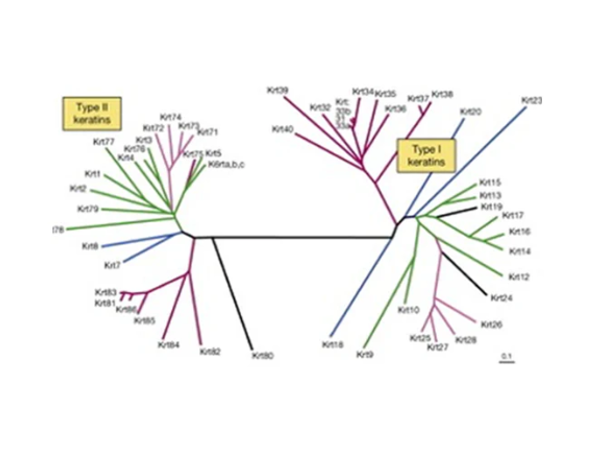
  • The role of different keratin types and how keratin filaments form the structural framework of hair
  • The molecular bonds that stabilise keratin, including disulfide, ionic and hydrogen bonds, and how these influence hair strength and shape
  • How the distribution of keratin bonds contributes to straight, wavy or curly hair patterns
  • The biological process of cornification and how follicular cells transform into the mature hair shaft
  • The three structural layers of the hair shaft — cuticle, cortex and medulla — and the role each plays in protecting and strengthening hair

The unit also examines how cosmetic and chemical treatments such as straightening, perming and heat styling alter hair structure by modifying keratin bonds. Participants will also be introduced to common hair shaft abnormalities, including split ends, trichorrhexis nodosa, monilethrix and other structural disorders.

Unit 2: Types of Hair and Determinants of Hair Colour

Unit two explores the diversity of human hair types and the biological mechanisms responsible for hair pigmentation.

Key topics include:

  • The different categories of human hair, including terminal hair, vellus hair, intermediate hair and lanugo hair
  • The characteristics, functions and anatomical distribution of each hair type
  • How hair follicles can transition between different hair types throughout life in response to hormonal, genetic and environmental influences
  • Regional differences between scalp hair, eyebrow hair and eyelashes, including variations in growth cycle and clinical significance

The unit also examines the factors that determine hair colour, including:

  • The production of melanin by melanocytes within the hair follicle
  • The roles of eumelanin and pheomelanin in producing different hair colours
  • The genetic and molecular mechanisms that regulate pigmentation
  • The biological processes involved in hair greying and loss of pigment

Participants will also gain an understanding of racial and ethnic variations in hair morphology, hair shaft shape and hair growth patterns, and how these differences influence hair care practices and susceptibility to certain hair disorders.

Unit 3: Understanding the Skin of the Scalp

The final unit examines the specialised anatomy of the scalp and the dermatological conditions that commonly affect this region.

Participants will learn about:

  • The five structural layers of the scalp, remembered using the SCALP mnemonic: skin, connective tissue, aponeurosis, loose areolar tissue and pericranium
  • The dense vascular and neural networks that supply the scalp and support hair follicle activity
  • The high concentration of hair follicles and sebaceous glands within scalp skin
  • The sensory innervation and arterial supply that make the scalp highly vascular and clinically significant during injury or surgery

This unit also introduces common scalp disorders, including:

  • Inflammatory conditions such as seborrhoeic dermatitis, psoriasis and atopic dermatitis
  • Infectious conditions including tinea capitis and bacterial folliculitis
  • Non-scarring and scarring alopecias that affect scalp hair
  • Benign and malignant skin conditions that may develop on the scalp

By understanding the anatomy and physiology of the scalp, practitioners are better equipped to recognise disease patterns, perform clinical examinations and manage scalp-related conditions.

Upon completion of the course, participants will have a deeper understanding of hair shaft biology, hair diversity, pigmentation and scalp anatomy, providing a strong foundation for recognising and managing hair and scalp conditions in clinical practice.


Learning Outcomes

  1. Interpret information on hair shaft anatomy and the hair cycle to make clinical decisions
  2. Apply knowledge of hair shaft anatomy and the hair cycle to patient cases.

Details

Cost: Please refer to Healthcert's website
Suitable for: All degree qualified medical practitioners
Study mode: 100% online
 
Disclaimer: Please note, once you click 'Register now' you will be leaving the AMA’s CPD Home website and entering a third-party education provider’s website. If you choose to register for this learning, you will need to provide some of your personal information directly to the third-party education provider. If you have any queries about how third-party education providers use, disclose or store your personal information you should consult their privacy policy.
 
Upon completion, your CPD activity record may take up to 4 weeks to be reflected on your CPD Home Dashboard.   

Provided by


CPD Activity Details
Topic
General Practice and Primary Care
CAPE Aspects
Professionalism
Effective Year

Educational Activities (EA) - 4.30

Reviewing Performance (RP) - 6.0

Measuring Outcomes (MO) - 0.0

You have to log in to see the content of this module.

*Medical Board of Australia’s (MBA)’s Registration Standard: Continuing professional development (the Standard)