Finding accredited CPD
Male pattern hair loss, also known as androgenetic alopecia, is the most common form of hair loss in men and a frequent presentation in primary care and dermatology practice. Although often considered a cosmetic concern, hair loss can significantly affect a patient’s confidence, emotional wellbeing and quality of life. Accurate diagnosis and appropriate treatment require a clear understanding of the biological mechanisms driving hair follicle changes, as well as the clinical patterns that distinguish male pattern hair loss from other causes of alopecia.
This course provides clinicians with a structured and evidence-based framework for diagnosing and managing male pattern hair loss. Participants will explore the underlying pathophysiology of the condition, learn to recognise characteristic clinical patterns, assess disease severity, and understand the psychological impact that hair loss can have on patients. The course also reviews the full spectrum of treatment options, from medical therapies to procedural and cosmetic approaches, enabling clinicians to develop individualised management plans that align with patient expectations and clinical goals.
Unit 1: Pathophysiology
This unit introduces the biological mechanisms underlying male pattern hair loss.
Participants will explore:
The genetic basis of androgenetic alopecia and its strong hereditary component
The role of androgens, particularly dihydrotestosterone (DHT), in driving hair follicle changes
The function of the dermal papilla and hair follicle stem cells in hair growth regulation
How androgen signalling disrupts the hair growth cycle
The process of progressive follicular miniaturisation, where thick terminal hairs gradually become thin vellus-like hairs
Understanding these molecular and hormonal mechanisms provides the scientific foundation for modern treatments targeting the androgen pathway.
Unit 2: Epidemiology and Disease Associations
Unit two examines the prevalence of male pattern hair loss and its broader health associations.
Participants will learn about:
The high prevalence of male pattern hair loss, affecting approximately half of men by age 50
Differences in prevalence and patterns of hair loss across ethnic groups
How the severity of hair loss tends to increase with age
Associations between male pattern hair loss and systemic conditions such as cardiovascular disease, metabolic syndrome and benign prostatic hyperplasia
This unit highlights why clinicians should consider hair loss not only as a cosmetic issue but also as a potential indicator of broader health risks.
Unit 3: Clinical Presentation and Differential Diagnoses
This unit focuses on recognising the clinical features of male pattern hair loss and distinguishing it from other causes of alopecia.
Participants will explore:
The classic pattern of bitemporal recession followed by vertex thinning
Variations in presentation, including diffuse thinning with preservation of the frontal hairline
Key trichoscopic findings such as hair shaft diameter variability, miniaturised hairs and yellow dots
Differential diagnoses including telogen effluvium, alopecia areata, traction alopecia and certain scarring alopecias
The unit emphasises the importance of careful clinical assessment and dermoscopic examination when the diagnosis is uncertain.
Unit 4: Severity Assessment
Unit four introduces tools used to evaluate the severity and progression of male pattern hair loss.
Participants will learn how to:
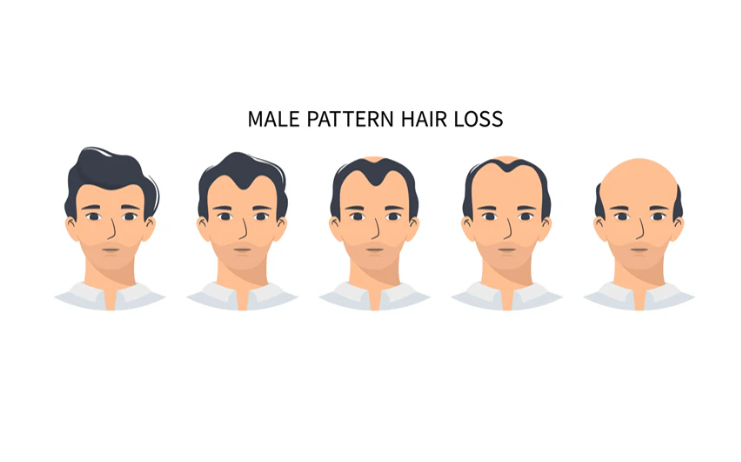
Apply the Hamilton–Norwood scale, the most widely used classification system for male pattern hair loss
Recognise the stages of hair loss progression from early hairline recession to advanced balding
Use alternative grading systems, such as the modified Sinclair scale, for men who present with diffuse thinning rather than typical patterned recession
These severity assessment tools help clinicians monitor disease progression and guide treatment planning.
Unit 5: Psychosexual Burden
Hair loss can have a profound emotional and psychological impact, and this unit explores the psychosocial dimensions of male pattern hair loss.
Participants will examine:
The emotional distress experienced by many men with progressive hair loss
The effects of baldness on self-image, confidence and social interactions
The ways patients adapt or cope with hair loss through behavioural changes
Factors associated with increased psychological distress, including younger age and greater severity of hair loss
This unit highlights the importance of acknowledging patient concerns and providing empathetic, supportive care.
Unit 6: Treatment
The final unit provides an in-depth review of treatment options for male pattern hair loss.
Participants will learn about:
Evidence-based pharmacological treatments such as topical minoxidil and oral finasteride
Additional medical therapies including oral minoxidil, dutasteride and topical finasteride
Procedural treatments such as platelet-rich plasma therapy and low-level laser therapy
Surgical options including hair transplantation techniques
Cosmetic camouflage strategies such as hair fibres, scalp micropigmentation and hair systems
The unit emphasises tailoring treatment strategies to disease severity, patient preferences and realistic expectations of outcomes.
This course provides clinicians with a comprehensive understanding of male pattern hair loss, from its biological mechanisms to its clinical management. By combining insights into pathophysiology, diagnostic assessment, psychosocial impact and treatment options, participants will gain the skills needed to diagnose androgenetic alopecia confidently and develop effective, patient-centred management plans for men experiencing hair loss.
*Medical Board of Australia’s (MBA)’s Registration Standard: Continuing professional development (the Standard)